Hero — Sonnet I, Lorri Acott
The premise is simple and exacting: each artist receives a juried poem by a Kitsap County writer and answers it on canvas, in paper, in print, in bronze. Not illustration. Not decoration. A reply. Ars Poetica — Horace's two-thousand-year-old phrase for the craft of poetry — becomes the working title for what happens when a maker's eye meets a poet's line and decides what to keep, what to discard, what only the medium can hold.
Sculpture answers first. Lorri Acott's Sonnet I is the show's most direct claim — a sculpted form named for a poem-form, a fixed answer that doesn't equivocate. Adam Schultz, NSS, working in bronze and stainless steel from his Loveland studio, contributes Tether to the Wild to round out the sculpture presence; the body and the animal and the line that holds them.
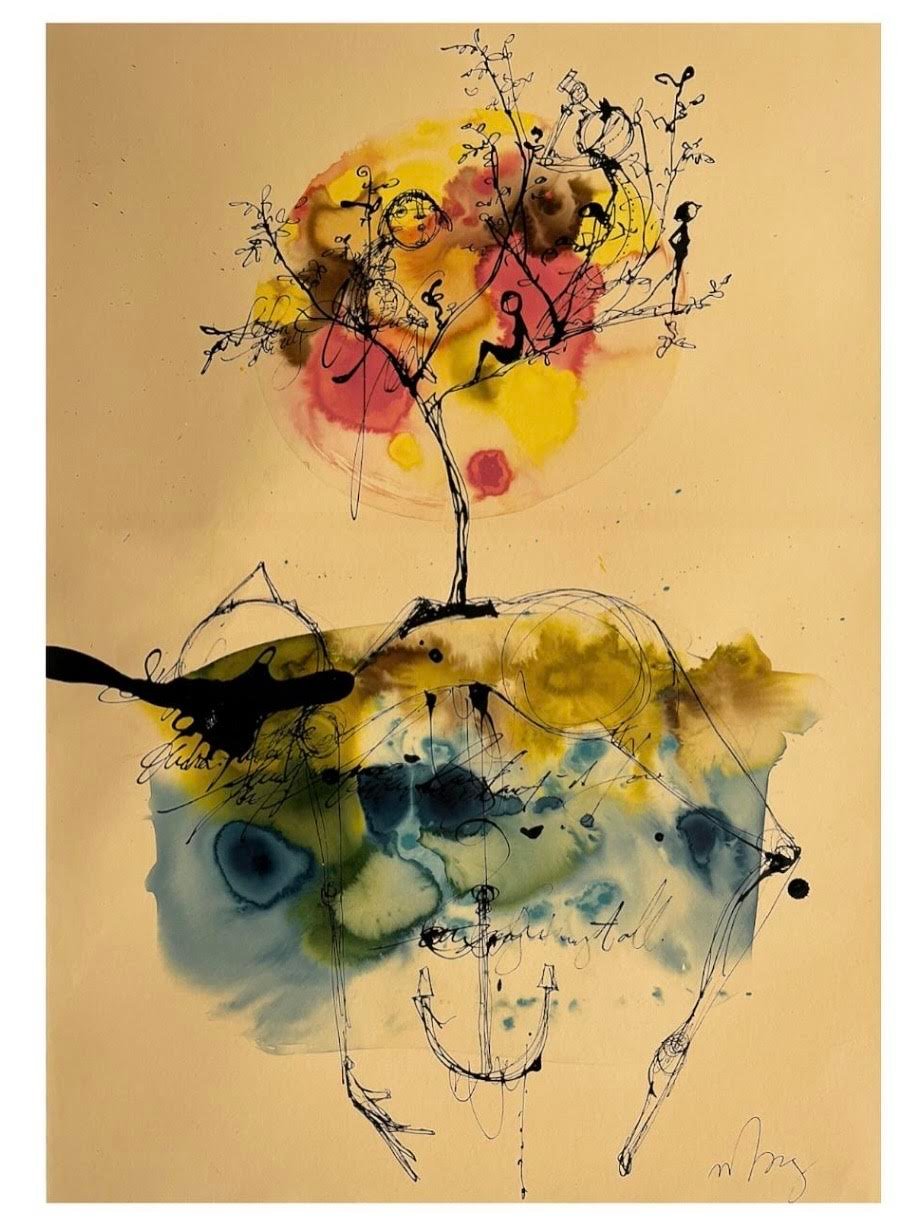
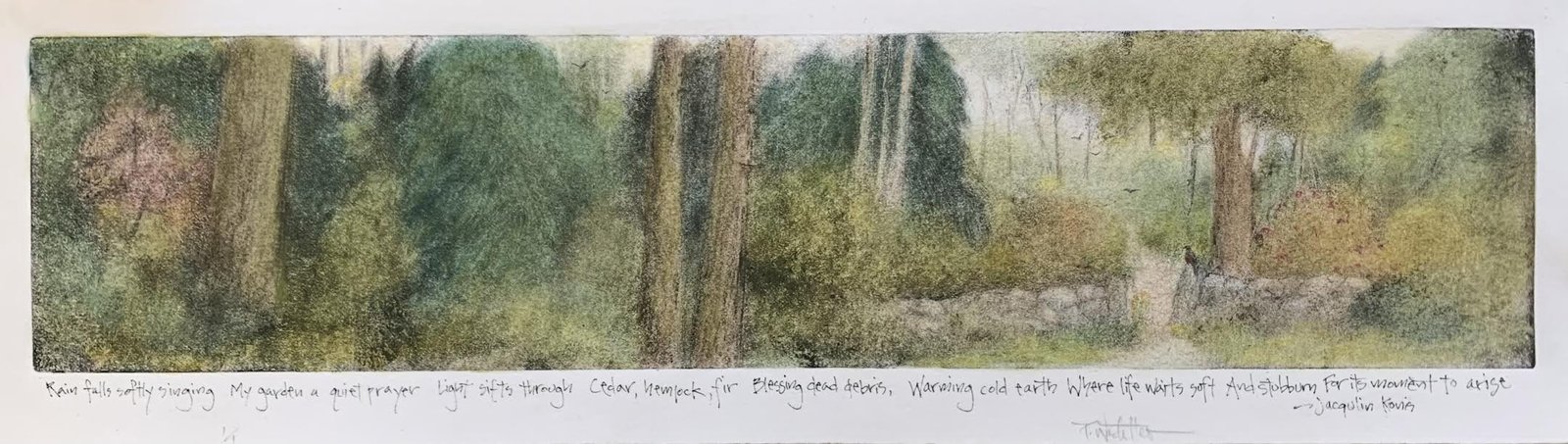
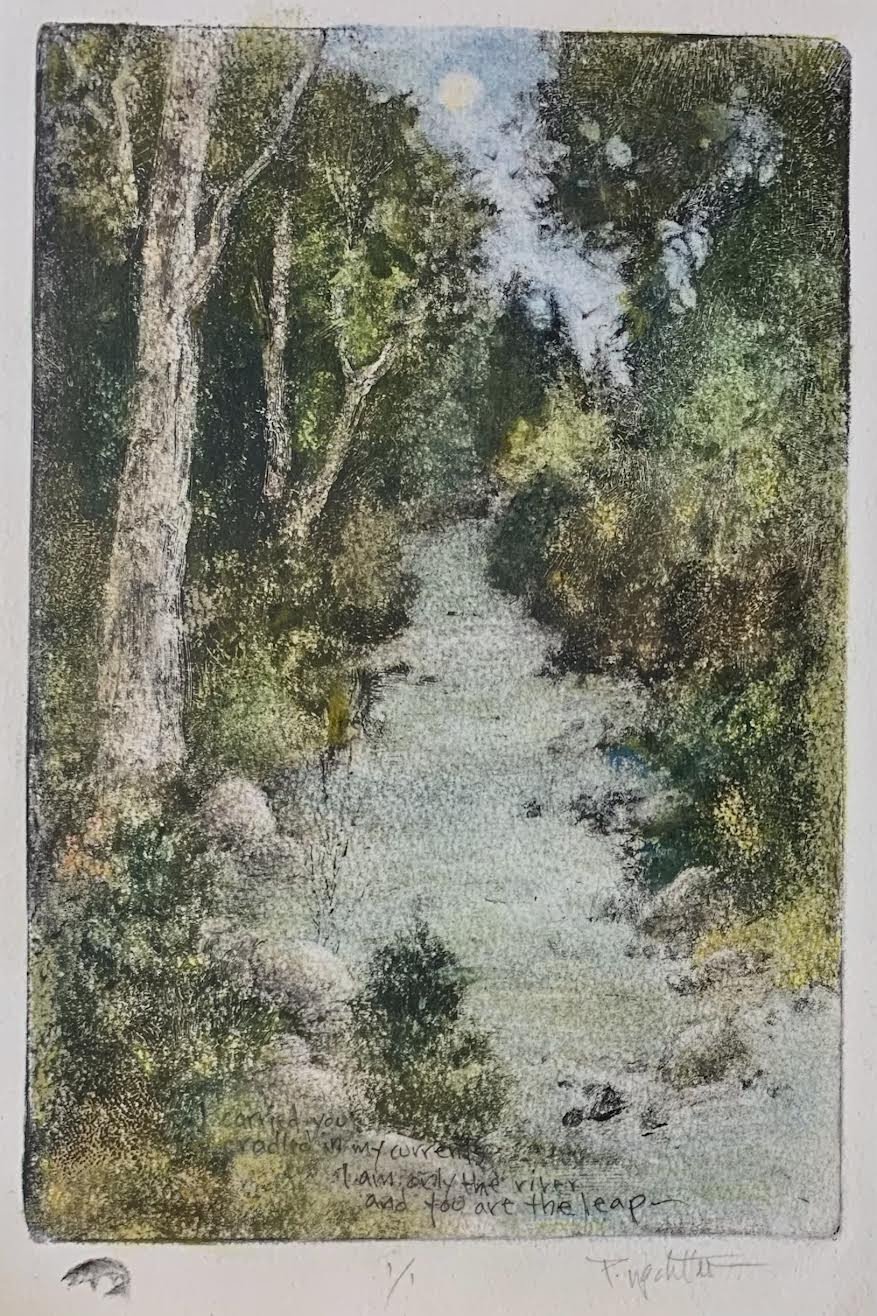
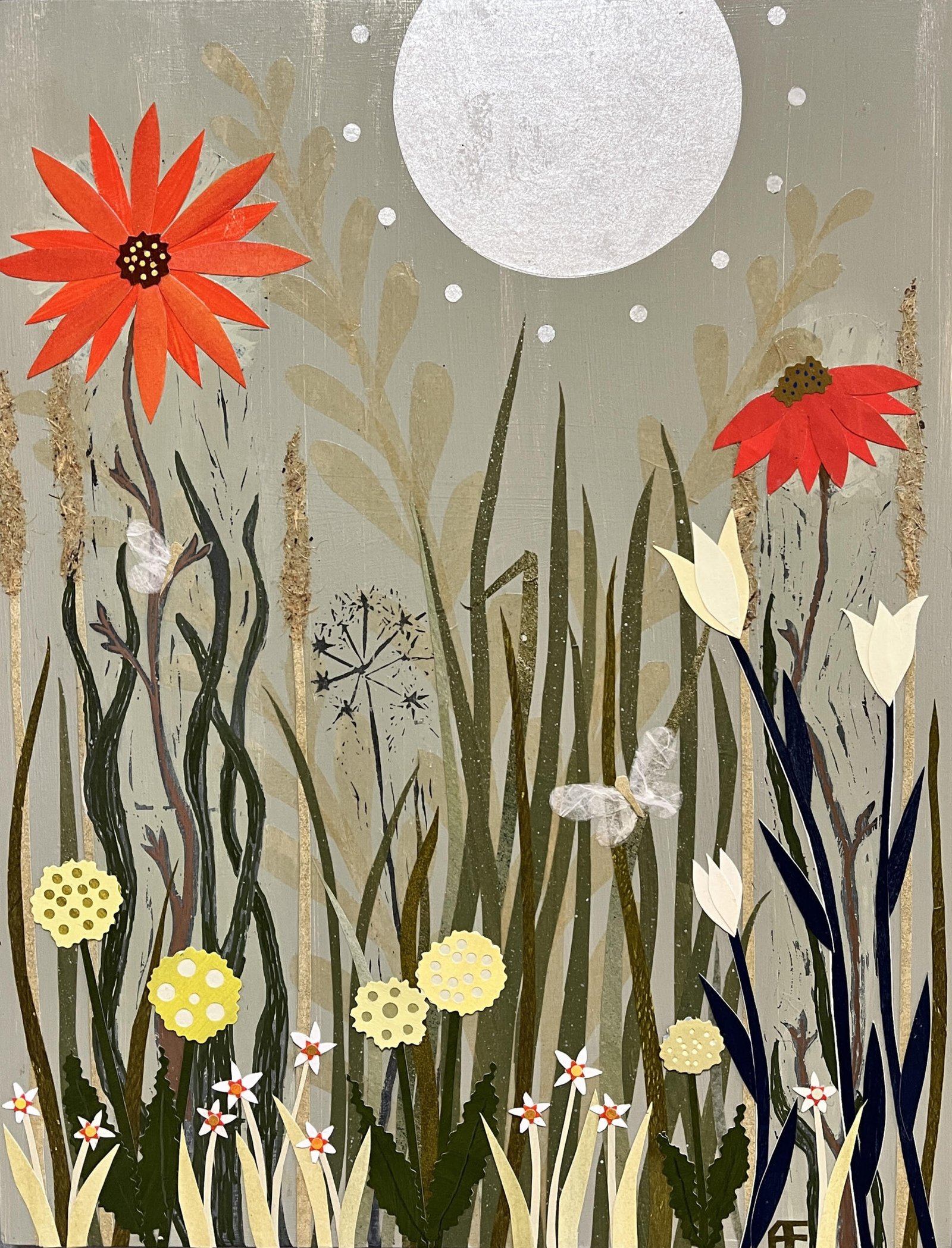
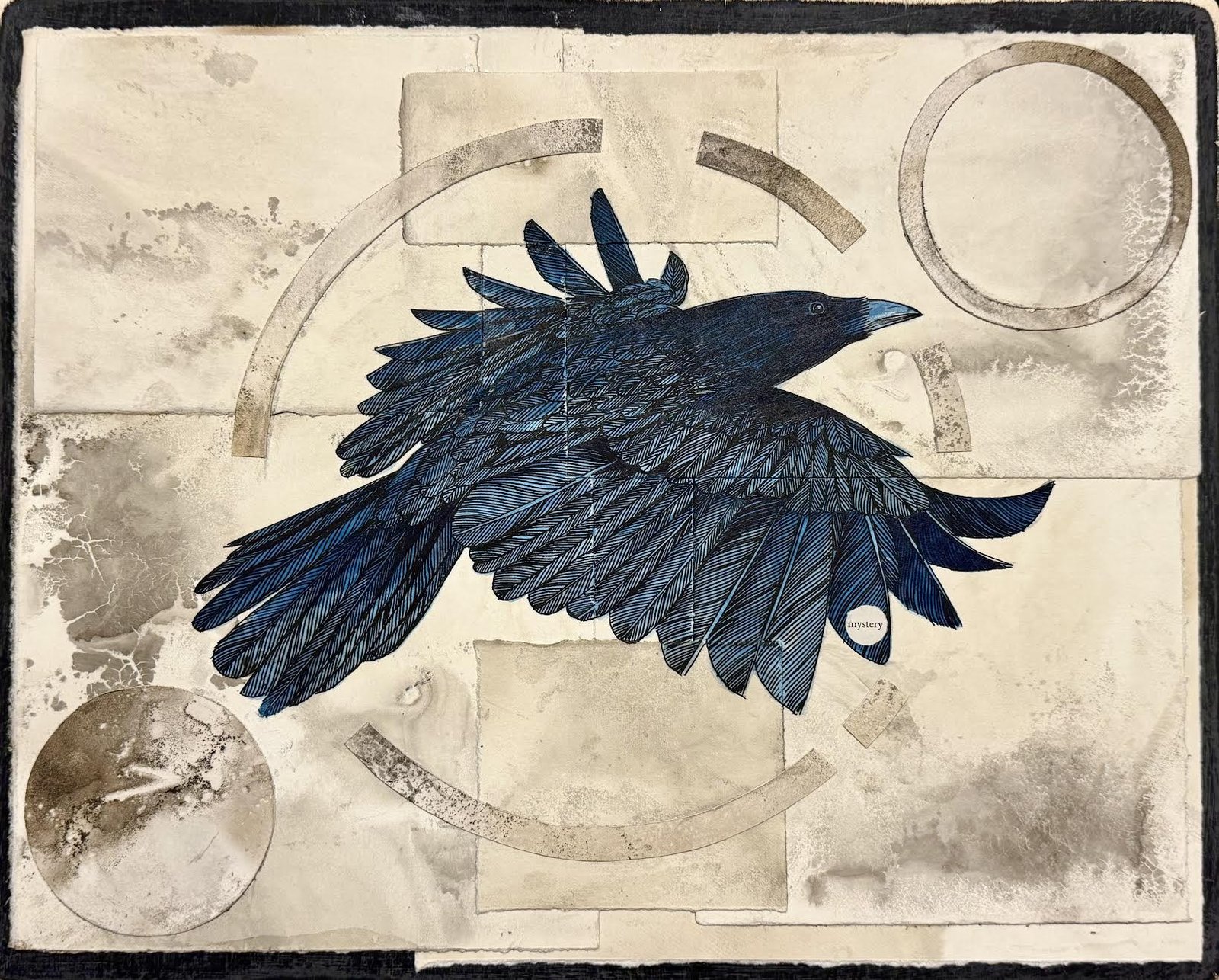
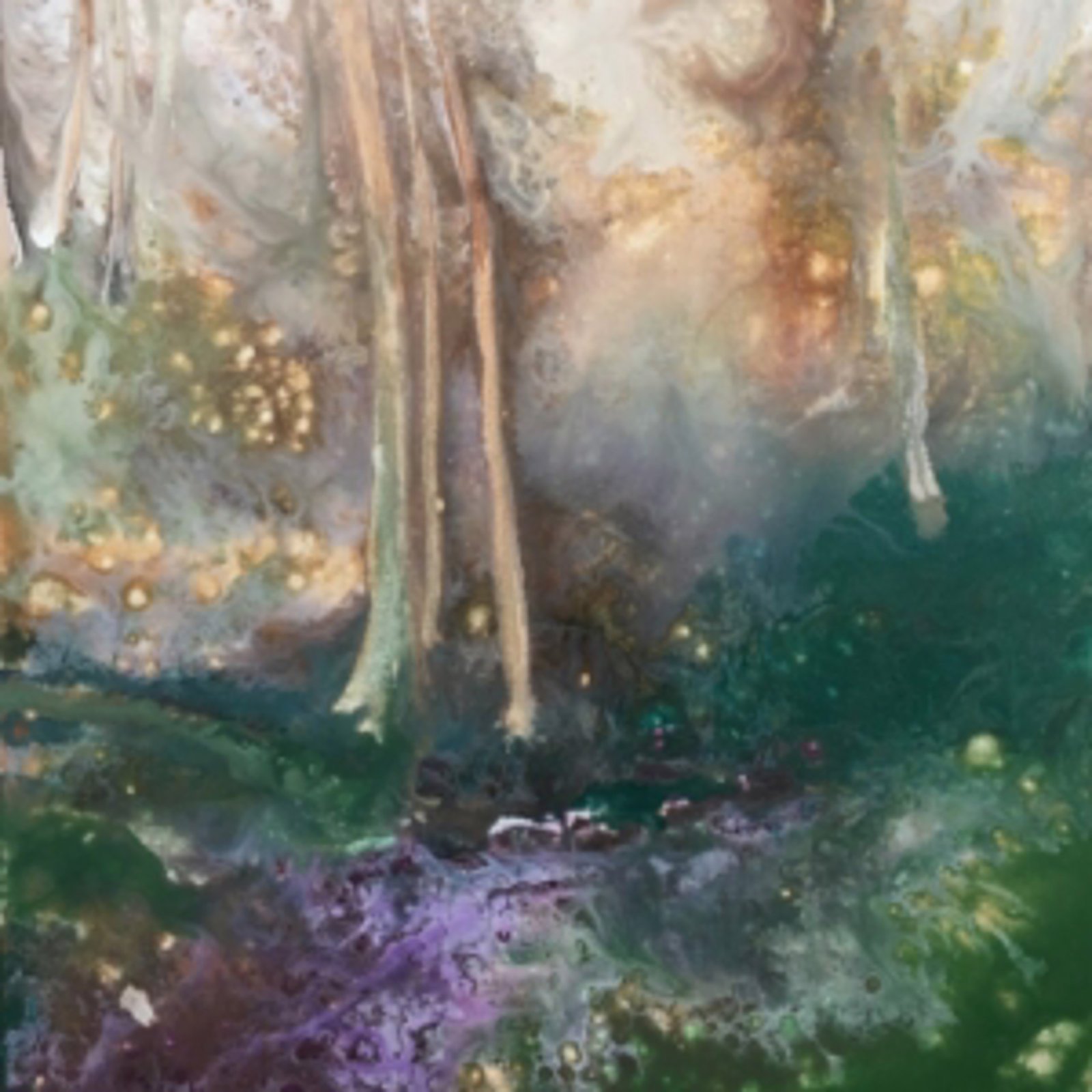
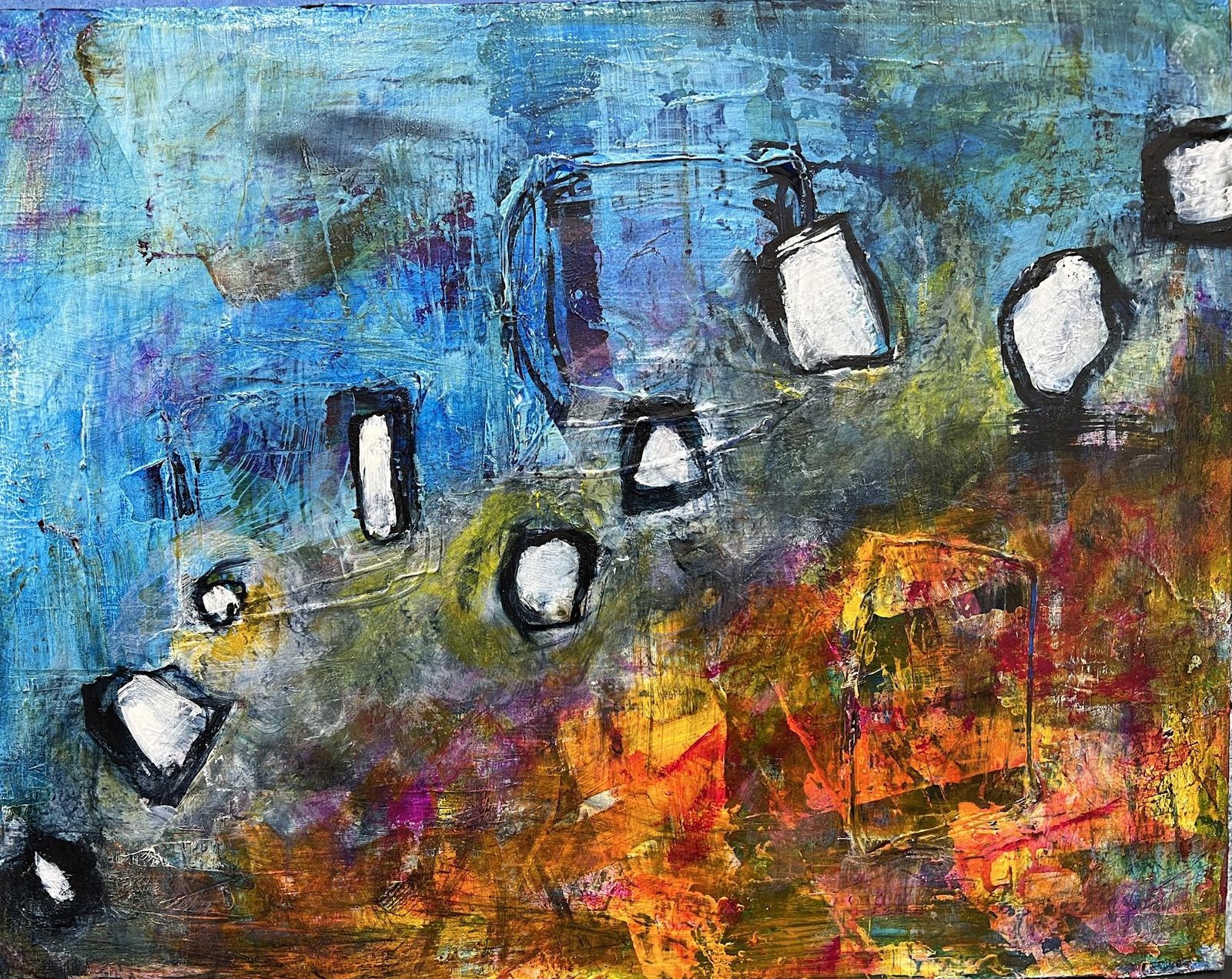
Painting and 2D hold the middle of the show. Denise Duong's Compass works in the language of map and figure — graphic, declarative, the answer arrived at directly. Amy Ferron's Waiting for the World to Turn (the glistening) is built from cut paper layered into atmosphere; collage as the slow accretion a poem also requires. Pamela Wachtler contributes two — Forest Garden and Upstream — paintings that study a place and its weather with the same care the poets bring to a single line. Tim McMeans's On The Next Wind, mixed media on wood with smoke-stained paper, holds the breath of its title. Parvin's Mist is the show's quietest answer; a held tone. Patricia Alessandro brings The Poetry of Sunflowers and Erica Nordean contributes Felis Catus #9 — both arriving as new entries to the JG roster for this show.
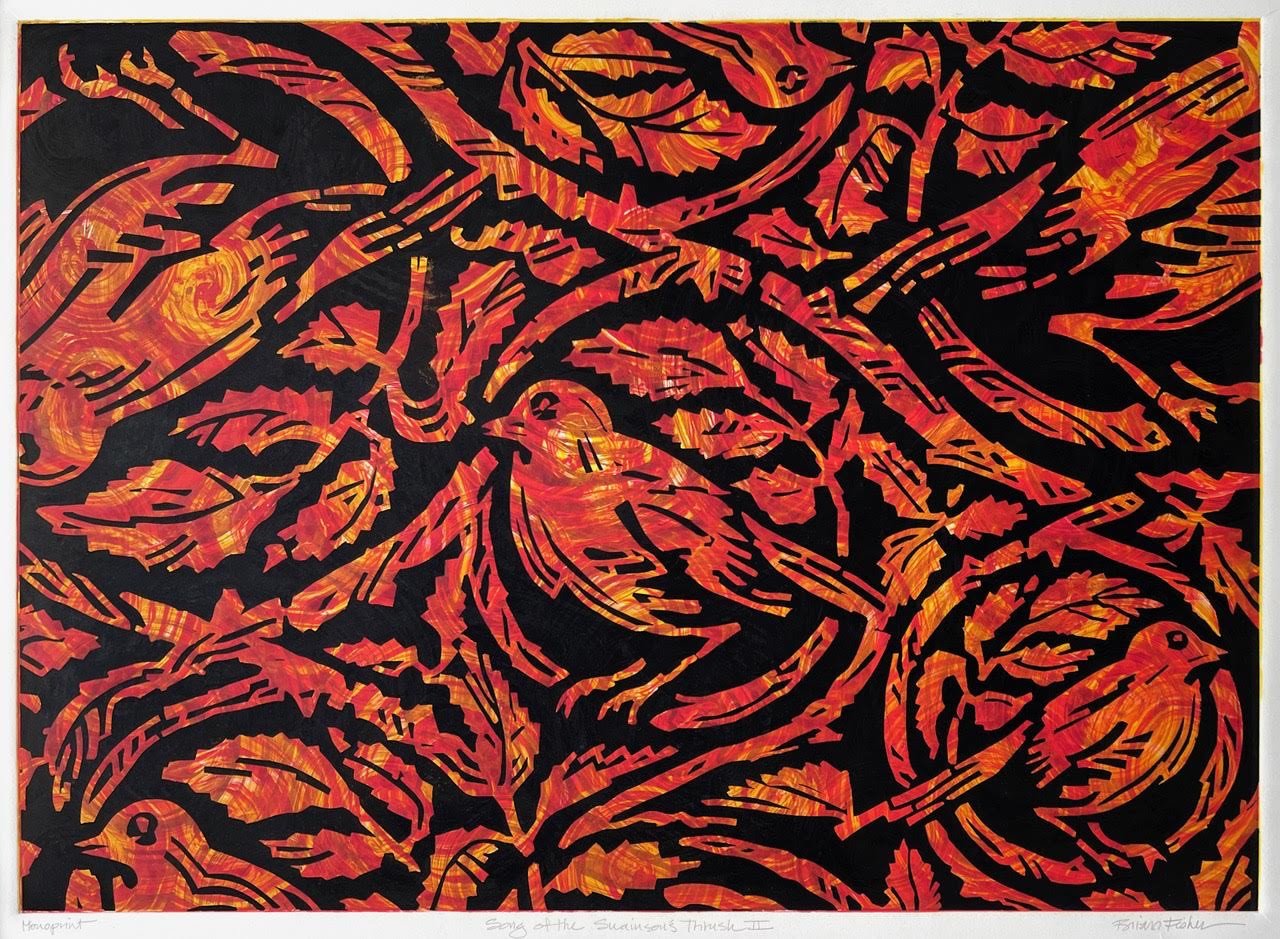
Printmaking closes the roster. Brian Fisher's monotype Song of the Swainson's Thrush II treats the surface as a single chance — one impression, no edition — the poem becomes a one-take answer.
Ten artists, eleven works, three media, and a single working principle: what does the image know that language doesn't, and what survives the trade.