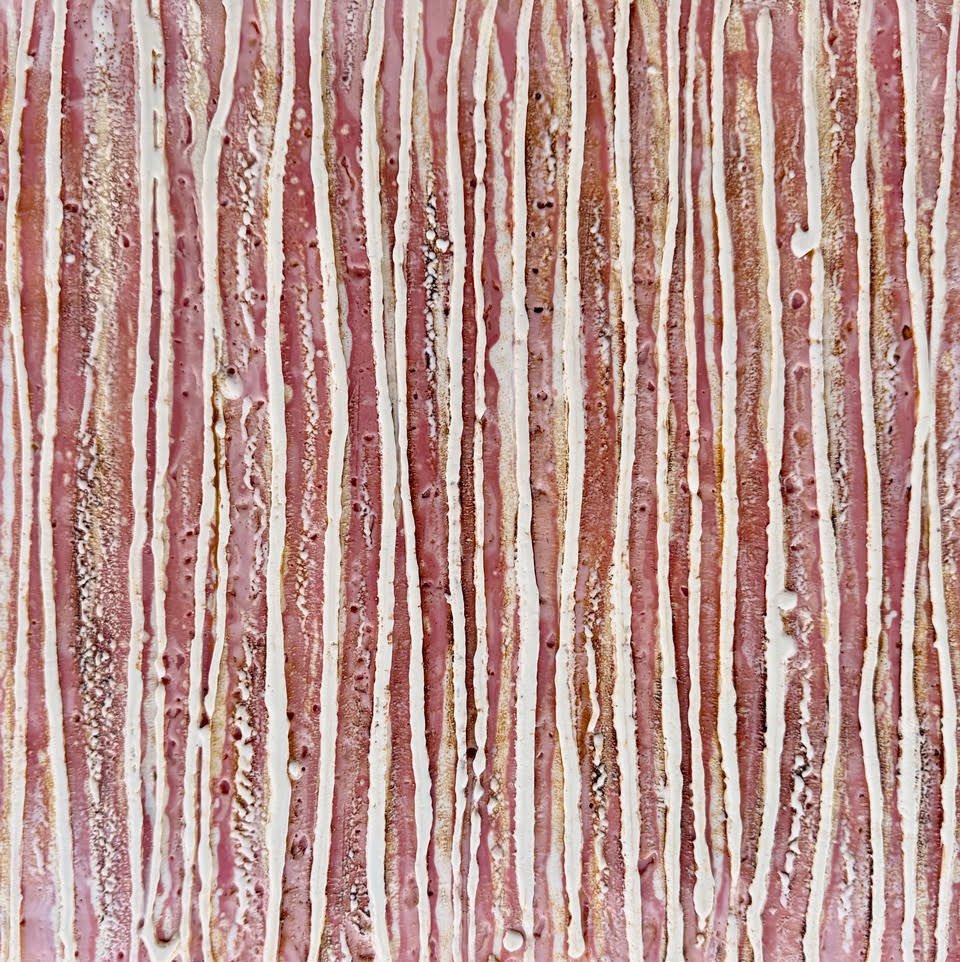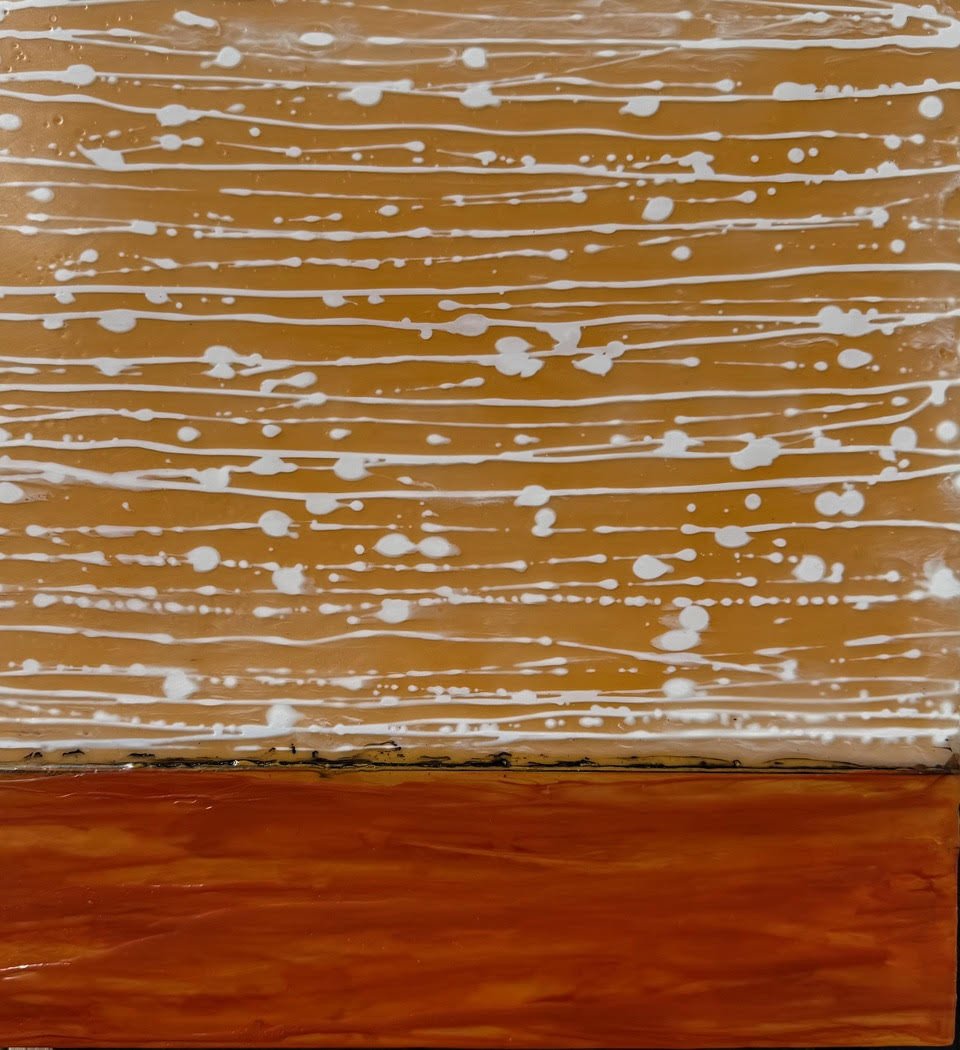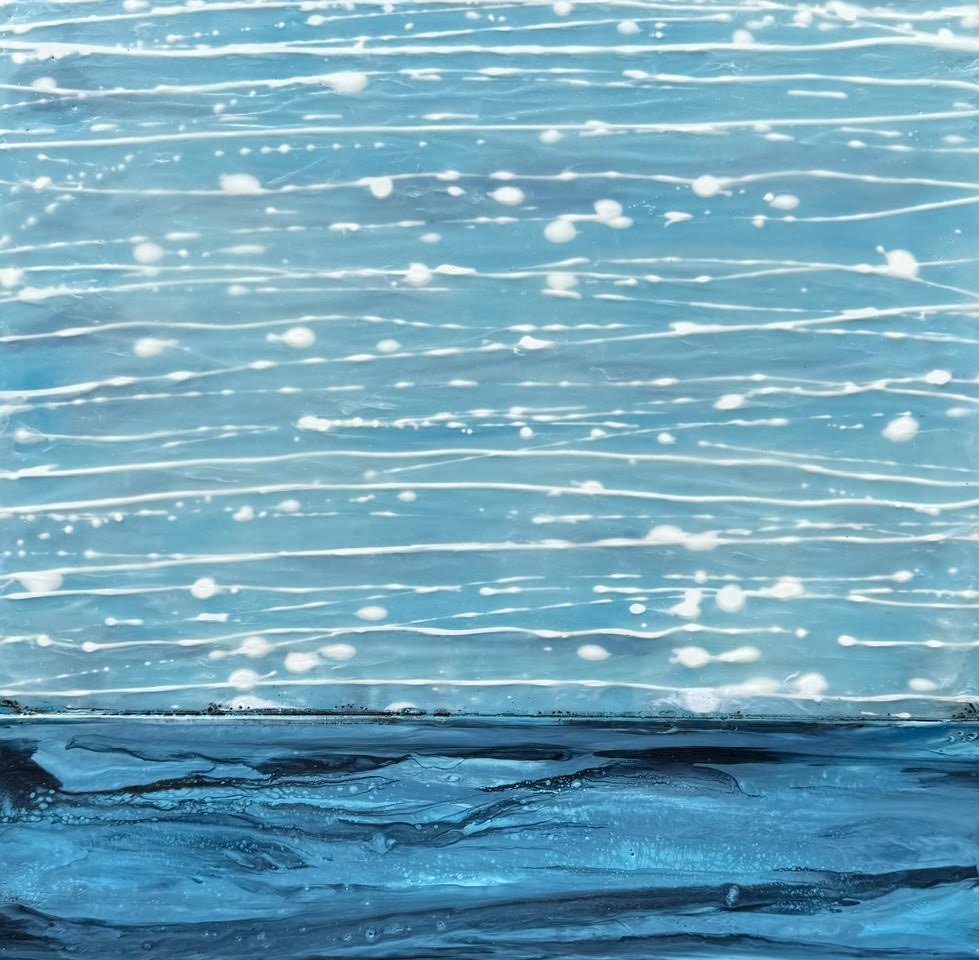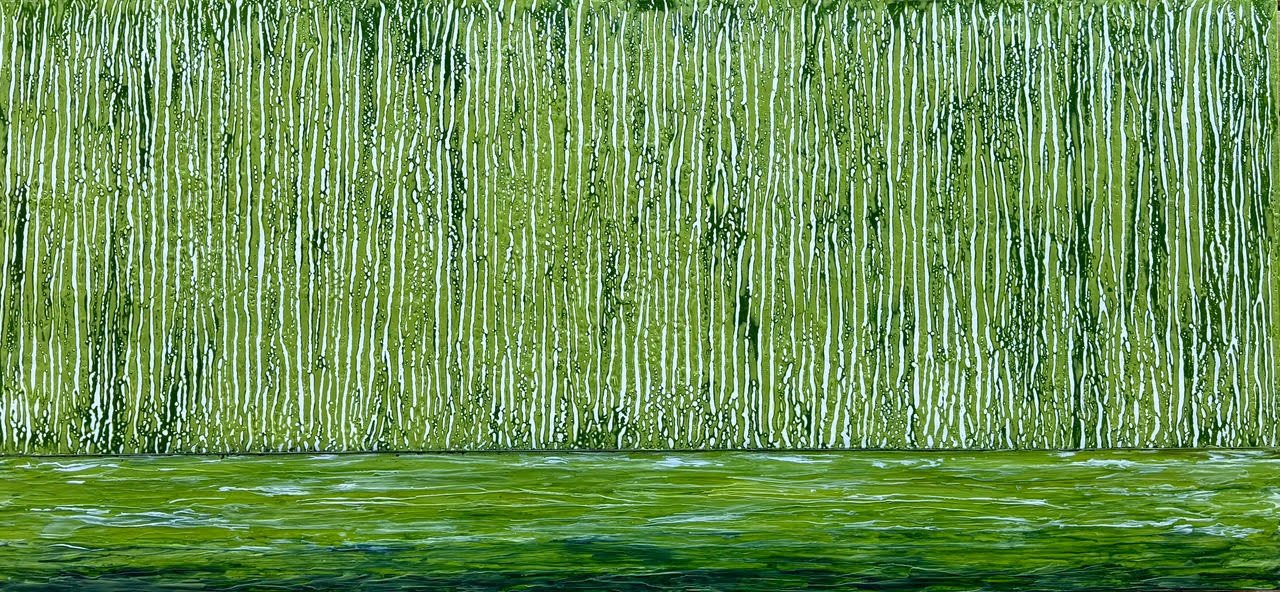
Tamera Abaté grew up in the wheat fields of the Columbia Basin in Eastern Washington — under vast open skies, watching the ever-changing color of fields that stretched to every horizon. She now lives and works in a mountain valley in north central Washington, in the Methow region, with horses and dogs and as much time outdoors as possible. Her medium is encaustic — one of the oldest painting techniques in existence.
The ancient Greeks called it “to burn in.” The Fayum mummy portraits, painted in Egypt in the first through third centuries AD, are the most famous surviving examples. Jasper Johns returned the medium to serious contemporary painting in the 1950s, and his encaustic paintings are now in the permanent collections of MoMA and the Whitney. Abaté works in that lineage — beeswax, tree sap, and pigment, sometimes in as many as thirty stacked layers, each fused with the heat of a propane torch.
The process is not illustrative. She does not draw a landscape and fill it in. The heat determines where colors go — the torch causes layers to meld, run, resist, and merge in ways that cannot be fully predicted.
What emerges is an image that is simultaneously abstract and rooted in landscape: the horizon line is always present, even when nothing in the painting is literally a field or a sky. She attributes this to her childhood in the Columbia Basin — the dynamic of a horizon line separating yet pairing enormous fields of color is, she says, something she responds to in every painting she makes. The layers in her work range from atmospheric to subterranean: looking at a finished surface is something like looking down through clear water at multiple planes below.
Tamera's work is shown across both Bainbridge and Park City. Browse the full collection — medium, dimensions, and price visible on every piece.